
RTS Balancing
A simple real-time strategy game with only 4 possible unit types and limited to only 6 parameters each + a spreadsheet that simulates 1v1 battles.
Parameters
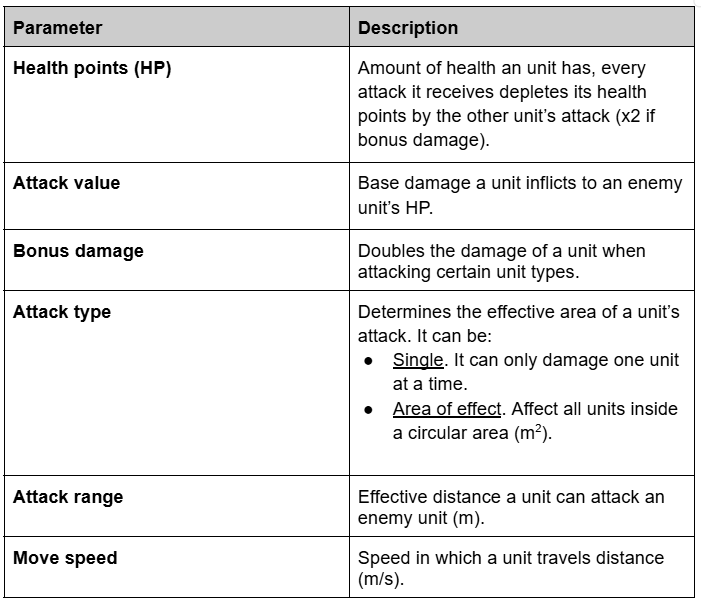
Other “hidden parameters” that units may have, like attack speed, size, acceleration, rotation speed, etc. are considered the same for each unit for simplification purposes. Units can’t attack while moving.
Unit types
Archer
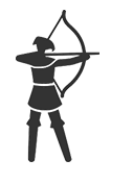
Can attack units in long distances but has low HP.
Usually placed behind units with more HP.
Deals bonus damage to spearmen.
Spearman
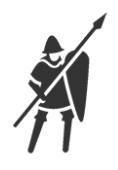
Has great HP but lacks mobility and attack range.
The frontline of an army.
Deals bonus damage to horsemen.
Horseman
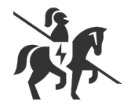
Has great mobility.
Useful to attack high value targets or retreating units.
Deals bonus damage to archers.
Sorcerer

The only unit capable of dealing area of effect damage.
Works great against grouped units.
Has the highest attack but is slow and fragile.
Doesn’t deal bonus damage against any unity.
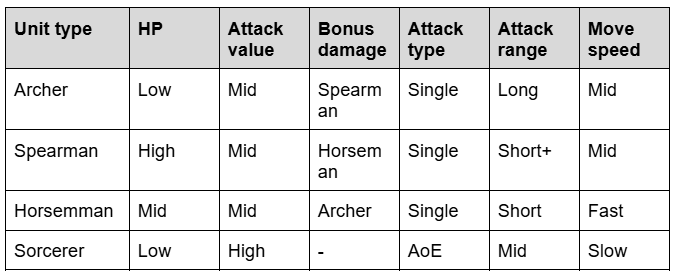
Table with abstract values
Unit dynamics
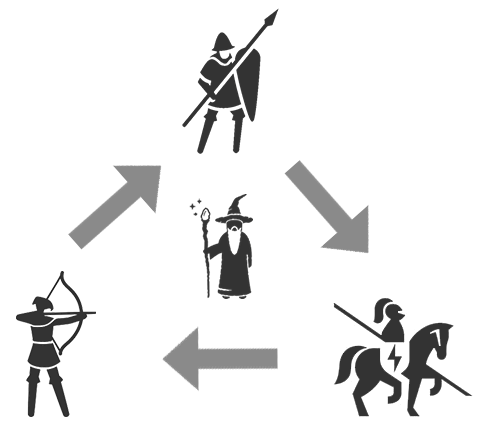
The gameplay mainly revolves around the proven rock, paper, scissors relationship:
Spearmen counter horsemen: bonus damage and more health.
Horsemen counter archers: bonus damage and move speed.
Archers counter spearmen: bonus damage and attack range.
But with an extra unit that can change the tide of battle if used correctly: the sorcerer - a unit that can deal massive area damage.
The game is focused on unit placement and unit targeting (micro play). By default, units will focus on the closest enemy unit but the player may change the target manually and take advantage of the bonus damage.
With the bonus damage, a player with a small army who places units correctly and gives good target commands can outplay a player with a bigger army.
Grouped units can be easily decimated by the sorcerer, so charging with brute force is not recommended.
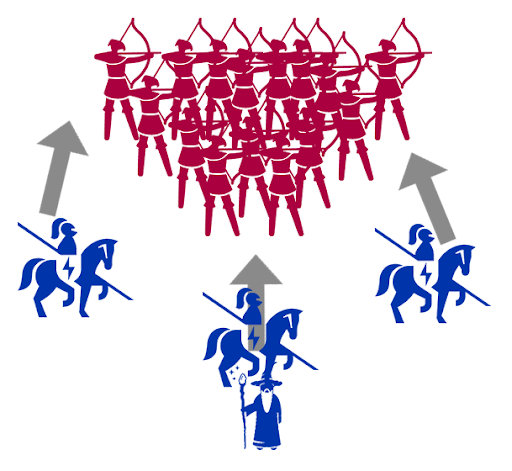
Raw numbers can overcome an enemy with bonus damage, for example a huge army of archers can one shot approaching horsemen but smart tactics can outperform that. See the following example:
Tactics vs raw numbers
The red player has a huge archer army that one shoots horsemen, so the blue player sends horsemen from multiple directions to create distractions while the sorcerer is approaching to crush the archer army.
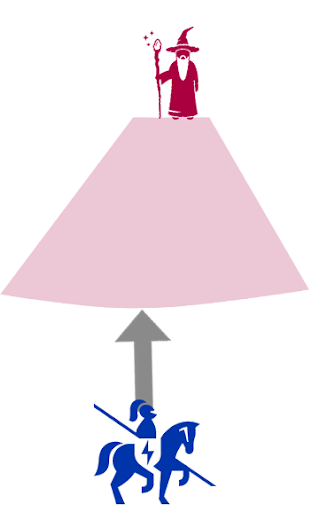
The key to victory is to adapt, there’s no winning strategy, everything can be countered, leading to interesting decisions - the main aspect of the RTS genre. Here’s an example depicting it:
Adapting strategy example
The blue player wants to use a horseman to quickly close the gap and attack the sorcerer.
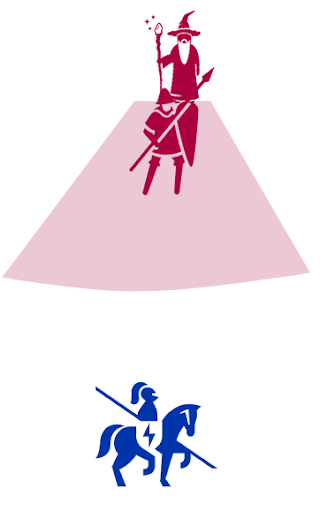
Red counter
The red player sends a spearman to guard the sorcerer, so the blue player stops the horseman.
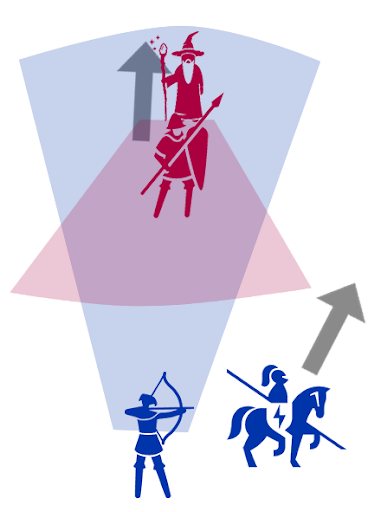
Blue counter
The blue player puts an archer, who has higher range than the sorcerer, to either attack it or bonus attack the spearman. The red player is forced to retreat and the horseman is sent to chase the less mobile sorcerer. If the spearman stays defending the sorcerer from the horseman, the archer will kill him. This leads to an interesting decision for the red player: to sacrifice one unit and save the other, to micro out play the blue player, to send reinforcements, etc.
Simulation Spreadsheet
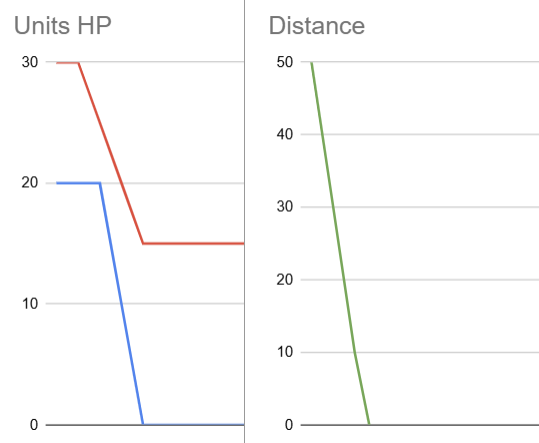
Here’s a spreadsheet that used the previous values to create a simulation between two units. Create a copy and follow the instructions from the first sheet.
